
George Orwell, 1984 and why Alex 24 begins in 2024
The calendar proved Orwell wrong. The vocabulary he gave us keeps proving useful—and helped shape the questions behind Alex 24.

We all know that 1984 was not like Nineteen Eighty Four. The year arrived, passed and entered history without Britain becoming Airstrip One. No Ministry of Truth rewrote yesterday before breakfast. No compulsory telescreen occupied every room.
It is tempting, from that safe distance, to treat Orwell’s date as a prediction that failed. I have always thought that misses the point. Orwell was not preparing a weather forecast for a particular year. He was giving shape to behaviours that power adopts when it no longer expects to be questioned: the editing of memory, the narrowing of language, the demand that people distrust their own experience, and the conversion of fear into routine.
The calendar proved him wrong. The vocabulary he gave us keeps proving useful.
From the telescreen to the screen in our pocket
The most obvious difference between Orwell’s imagined surveillance and ours is that we were rarely ordered to install it. We bought it. We upgraded it. We charge it beside the bed and feel uneasy when it is not within reach.
That does not make a smartphone an instrument of tyranny, and Alex 24 is not an argument for abandoning technology. The reality is more interesting than that. Modern observation is distributed across conveniences: journeys planned, purchases recorded, doors opened, photographs tagged, searches remembered and small preferences converted into predictions. No single person needs to watch every screen. The pattern can do the watching.
Orwell imagined power as something visible, central and brutal. Our version can be frictionless, helpful and almost invisible. It can arrive with terms and conditions, better recommendations and a button marked “accept”. That contrast sits behind much of the atmosphere of Alex 24, even when the novel is concerned with the ordinary, human decisions happening in front of the machinery.
What if the system did not need to force itself into our lives because we had already made ourselves legible to it?
The other 1984
There is another cultural object in the influence file: the famous computer advertisement first shown in 1984. It borrowed Orwell’s imagery to cast personal technology as the hammer thrown through the authoritarian screen. Its confidence is still thrilling. The machine in your own hands would break conformity rather than enforce it; the individual would be liberated from the central system.
Seen four decades later, the advertisement has acquired an irony nobody involved could fully have intended. Personal technology did decentralise power. It also created new concentrations of it. It gave billions of people a voice while making those voices measurable, sortable and commercially valuable. Both outcomes can be true at once. That tension, rather than a simple declaration that technology is good or bad, is far more useful to me as a novelist.
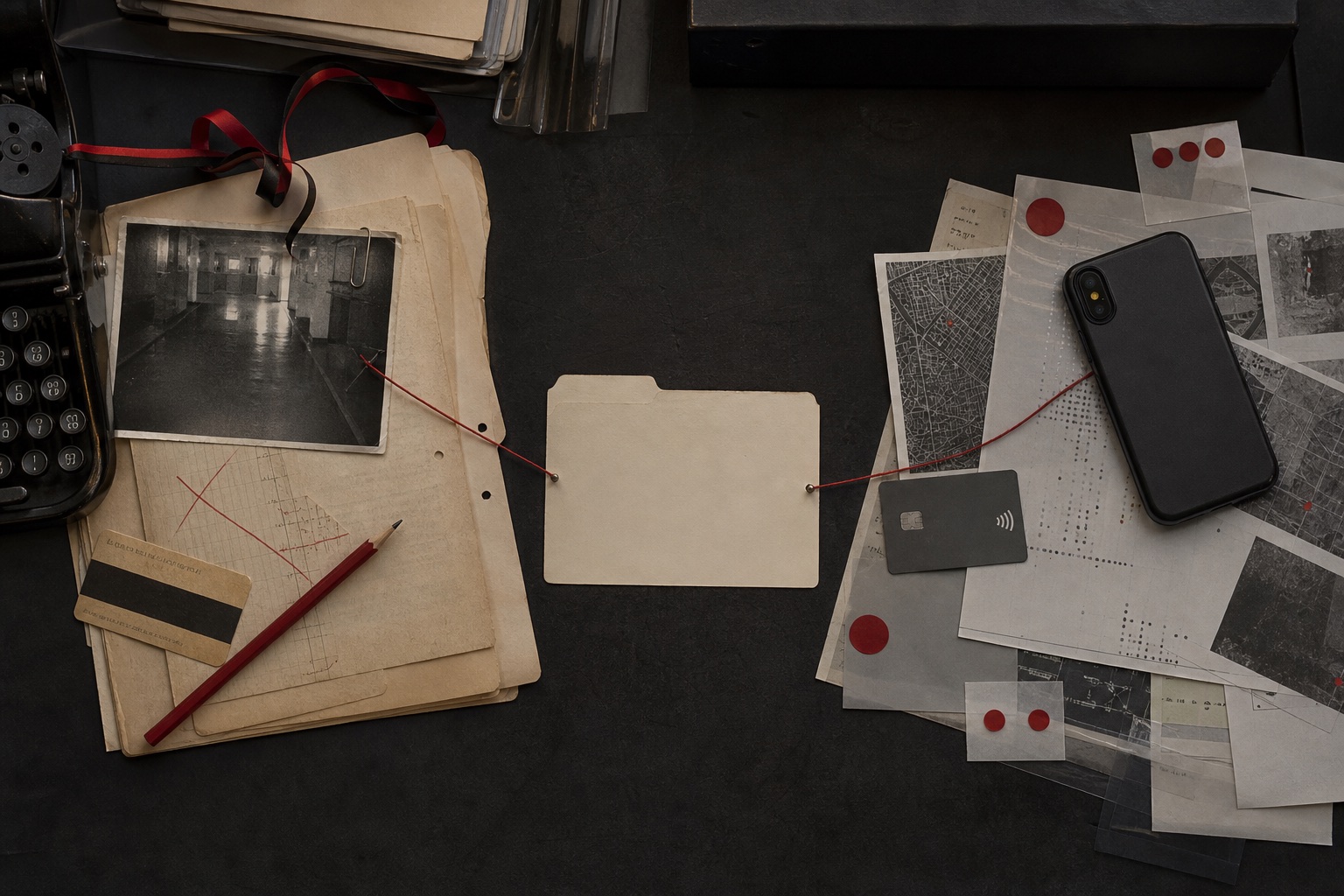
Why 2024?
I set the novel in 2024 because it felt like a year balanced between the familiar and the unstable. Political confidence was brittle in many parts of the world. War, disinformation, polarisation and distrust in institutions were no longer distant themes. People could disagree not only about what should happen, but about what had already happened in front of them.
It was also forty years after Orwell’s chosen date: close enough for his warning to be part of our shared language, far enough away for the mechanisms to have changed. The future in Alex 24 does not announce itself with marching boots. It looks very much like the present. That matters. The most consequential changes often become normal before they become visible.
Setting the story in 2024 allowed me to ask where the threshold might be. Not the moment when a fictional country becomes Oceania, but the quieter moment before that. It is the point at which temporary measures, useful systems and understandable fears begin to assemble into something nobody consciously chose.
An unofficial prequel?
A few early readers have described Alex 24 as feeling almost like an unofficial prequel to Nineteen Eighty Four. I take that as a huge compliment. It is not a literal prequel, and it does not borrow Orwell’s world, characters or political system. The connection those readers felt was one of trajectory.
Orwell shows us a society after the machinery of control has become total. I am interested in the people living while the components are still separate, when every compromise can be explained, every escalation can be called temporary and daily life still feels recognisably like our own. If the novel carries even a fraction of Orwell’s ability to make a reader examine the world outside the page, I could ask for no better response.
Influence without imitation
Nineteen Eighty Four is an influence on Alex 24, but influence is not a set of props. It is not enough to add cameras, slogans and a severe government building. What stays with me is Orwell’s insistence that political systems become personal: they enter friendships, private language, memory and the small internal space in which a person decides whether to trust what they know.
That is where I wanted to begin. Not with a world already lost, but with ordinary people navigating a world that still appears open. No one inside history is handed a title page telling them what kind of story they have entered.
This public essay is adapted from an Observer influence file. It discusses influences and themes only, contains no plot details from Alex 24 and can be read before the novel.
Read the story behind the questions.
Alex 24 is available on Kindle and Kindle Unlimited. You can also read the complete Prologue here for free.